August’s #WritingRocks chat focused on Ralph Fletcher’s ‘The Writing Teacher’s Companion’. Please find responses to the four questions below, incorporating the threads of conversation provoked by quotations we posted in the weeks before the chat itself.
BIG Thanks to this month’s contributors:
@lit4pleasure, @one_to_read, @TobiasHayden, @misslkfidler13, KLovesbooks1, @SadiePhillips, @MrMJLane, @biscuit_crumbs, @GalwayMr, @WinterImagines, @Gozzer66, @MrsSmanwar, @katehitchings1, @MrsRoseTeach AND @FletcherRalph himself!
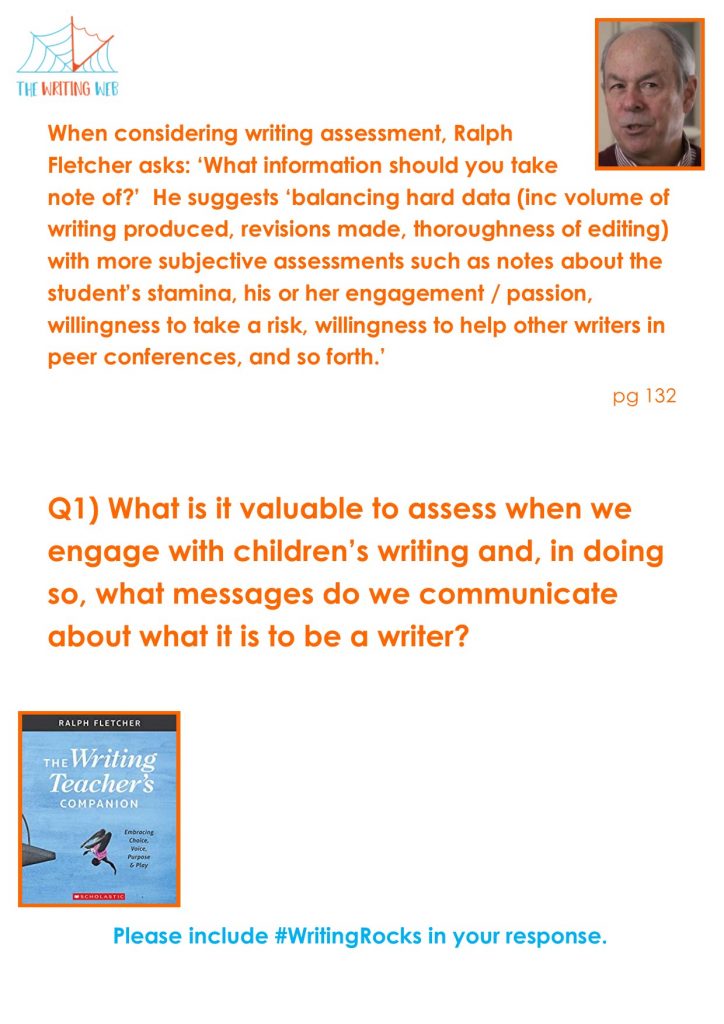
· I chose this question, as it cut through so many of the tensions aired during the Donald H Graves #WritingRocks chat question on assessment. You can read this here.
· Ralph Fletcher is asking questions about the skills, attitudes and behaviours necessary for children to successfully compose the texts they want to. He wants to grow writers not weigh writing. I believe that when we grow writers, they produce better writing.
· It’s an interesting question because presently a child’s writing processes are not part of assessment by the STA.
· Do children get to a say in assessment too? Does the reader the writing was intended for get to give their opinion? If not, why not?
– Should we assess only for accuracy?
– Should we assess for interest, style and content? Should this be just the teacher or the reader(s) of the text?
– Should we assess how successfully and appropriately the child has written in relation to the genre chosen?
· What writing should we assess too? Published pieces that were taken to publication at the instigation of the child? Teacher-suggested class writing projects? Non-published pieces from personal journals? Pieces that were given up on? A good mix of all of the above I would suggest.
– Should we be assessing depending on how socially responsible the child has been and has their writing had a positive impact on the readership?
· That becomes more and more precise as children get older. Very early writers are very much in the ego-centric stage: DON’T TOUCH MY MODEL!
· As the child grows, there is a more nuanced feeling of audience so using peer assessment is really important then too.
· I think we should give consideration to assessing their willingness to write about their own culture and funds of knowledge. This might tell us how they view the importance of their voice. This is something I would expect to see a lot of in a writing workshop class.
· I think this is certainly something that should be taken into account when assessing. However, I worry we may assess more positively depending on how much the child has been willing to reveal themselves. I’ve certainly found this a tension under the current assessment regime.
· Agreed. Many children come to a writing-workshop teacher with little exposure to this way of working and are reluctant and/or struggle to write about their own topics. Some writers tend to reveal themselves earlier and with more zeal. This depends on a number of factors.
· Depends at which stage in the process…primarily it’s the engagement in the writing – what is hard? what’s exciting? – then as the process goes on it’s going to be more about the technicalities and effects.
· I agree with this Ben. I suppose we should look at how the writer converts ideas from notebook to drafting stage alongside willingness to rehearse and use any pre-writing strategies too.
· Yes! There’s a lot of unspoken areas for assessment which are so crucial to a writer’s success and self-awareness. These are good additions, Tobias. 🙂
1) Should we assess individual pieces of writing?
2) Should we only assess a portfolio of writing? Both class writing and writing chosen by the child as being some of their most successful writing?
3) Should we assess the development of the writer and not their writing?
· Depends what we are assessing for! I’m going to go with assessing for the writer (!) so my answers are:
1) yes, if they want it assessed in some way
2) they should have a say in the choice of what to assess: best writing is not always ‘class tasks’
3) definitely it’s really important for those who see writing as something which is hard or not natural. EVERYONE has the potential to communicate well through writing and if these children are assessed on their development then they will feel good about themselves that way.
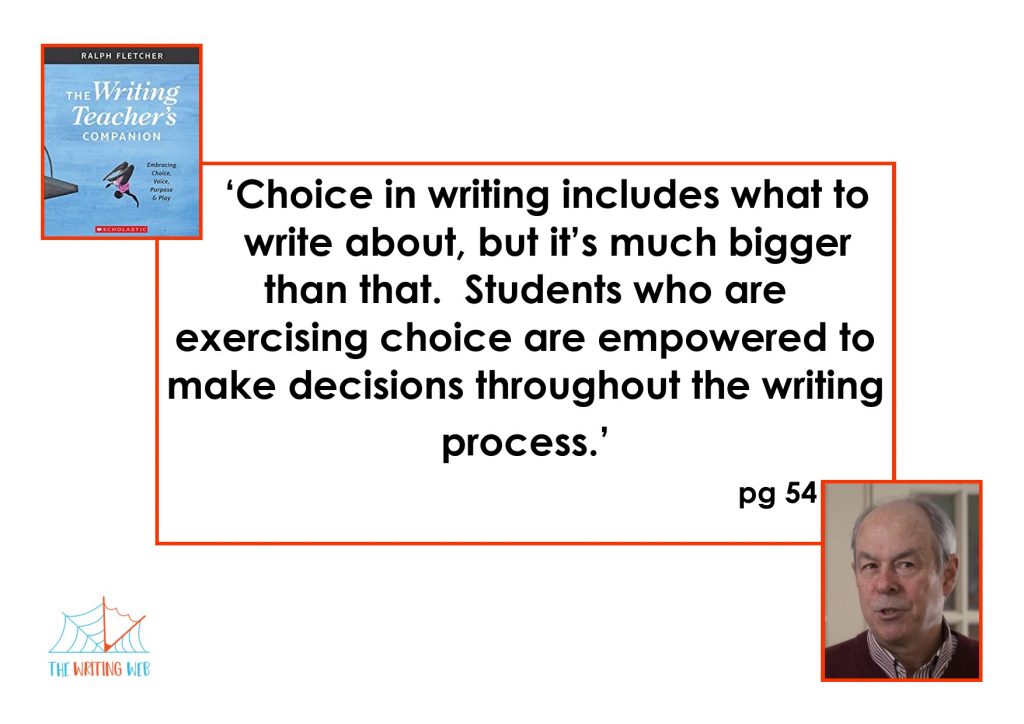
- Children must see that what they have to say matters: writing about how to fish, my dog, the funny story about what happened on holiday … THIS is what matters to develop sense of what writing is for. But unless we encourage it and show it matters, how will they learn to choose?
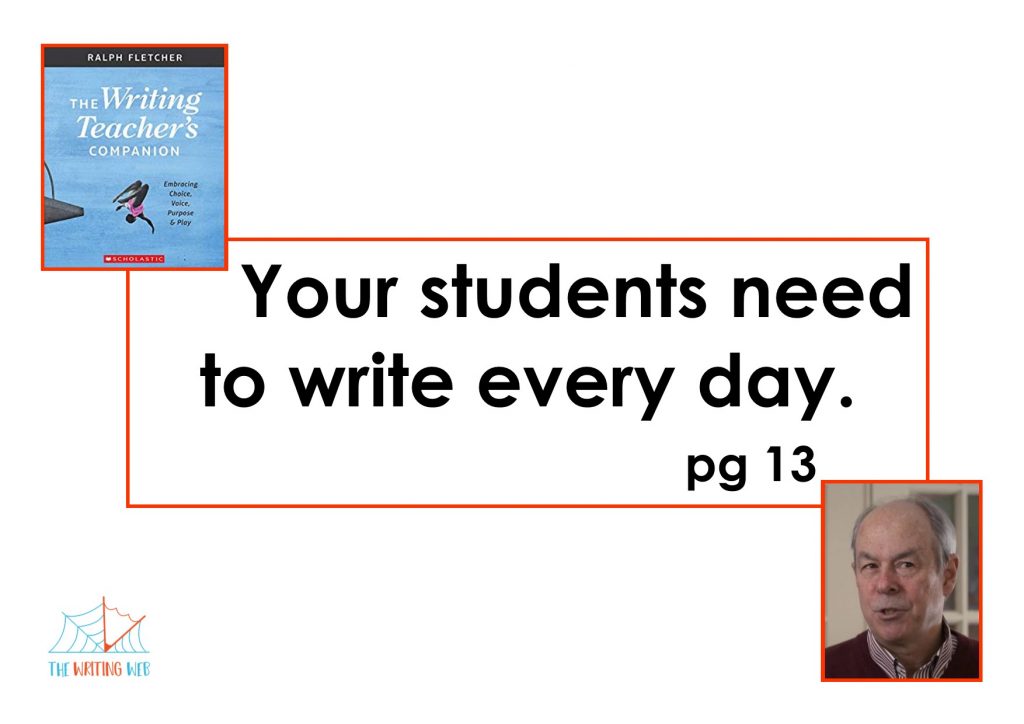
- And when we say “write” I’m assuming we are meaning composing and thinking of actual writing, not filling in worksheets or just recording stuff.
- This is a very good book. I would say an ideal starting point for any teacher looking to begin a writing workshop approach; there are a lot of echoes of the Writing for Pleasure manifesto to be found here too.
- I think Fletcher talks a lot about engagement. Motivate children to write first, then focus on quality later. A lack of desire to write is the enemy of improvement so this is entirely logical. Secondly, momentum in writing is something to be considered.
- If you are not writing everyday, how likely are you to be able to ‘get into’ a piece of writing? I tend to encourage home-school personal writing projects which are worked on daily alongside the whole class project. This ensures daily writing with the option to continue at home.
- Something I’m going to be doing next year a lot,
- Thanks for this inspiration.
- In his handbooks aimed at children, Fletcher says that in that keeping a notebook of ideas, lists, dialogue, scraps, the writer self grows. The daily use of this will heighten the sense of “writing is everywhere” and would naturally instigate writing every day.
- We have writer notebooks in KS2. In KS1, they take on more of a whole class form which encourages discussion. I use them when modelling writing to model the thinking process and magpieing of ideas.
- This sounds great. They’re also about heightening the sense of sources of writing everywhere. This would lead to writing every day very naturally.
- These are a round the clock, key tool for me. Would also encourage a private equivalent for at home – just fostering that notion of writing as an ‘at hand’ tool to express, develop, collect, refine ideas, and tussle with/gain clarity in thought.
- Phil and I used to say to our year 5s that their notebook should always be within touching distance.
- We also ensured these notebooks could go to and from school freely.
- Encouraged children to be in a constant state of low-stakes composition.
- I’m planning on sending them back and forth from home too. Fletcher says about decorating them and I think this is very important. I noticed last year how similar books were decorated by my class, quite without direction, to show ownership and connection.
- I keep thinking about the idea that we happily say “children should read every day” so why wouldn’t we say that about writing? I’ve planned a lot of reading into writing opportunities for next year, which strongly relate fiction reading to their own lives/personal writing.
 Time and again @lit4pleasure’s interview data from all children but particularly boys stated that they enjoyed writing more and wrote better when the bottom three domains were attended to by their teacher / the classroom community.
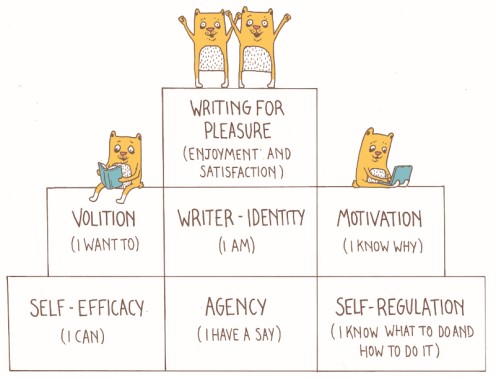
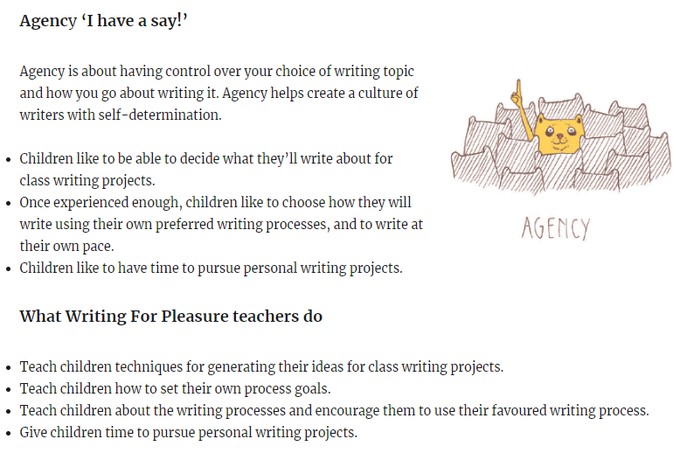 · Personal context flows from agency, perhaps this is why it is the central block in your graphic. With agency comes the responsibility to write something personal. This increases motivation as without agency, the blame for failure is not fully yours.
· Great point that I hadn’t considered! A really interesting question to ask children about too. Some research lit has certainly shown that children feel more ‘internal motivation’ to do well with agency and connection to their writing and this is more effective than simple compliance motivation.
· Yes! I was saying how important assessing development is for less confident writers. We must make sure that the process is INCLUSIVE and for that we need to address our own issues of what is expected in a good bit of writing…and it ain’t just handwriting!
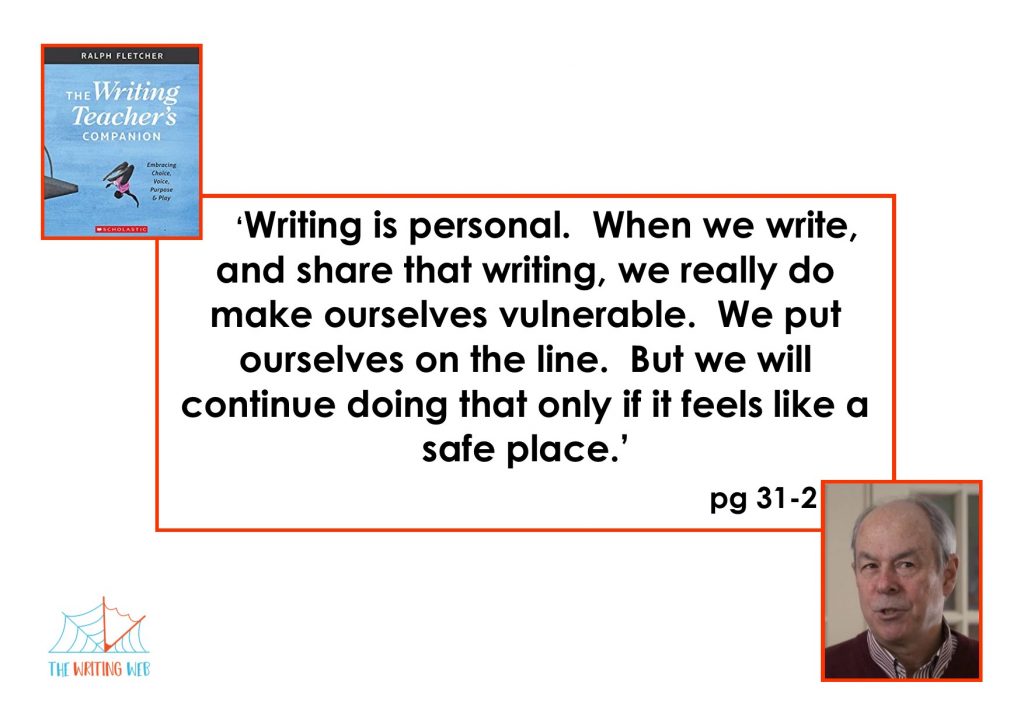
· By sharing your own writing journey with the children; showing them your mistakes and the problems you face as an adult writer. I think this gives them confidence and the courage to write.
· I agree with Fletcher’s point about engagement coming first being a path to inclusivity. Also writing for an audience of peers to impress them or make them laugh is a valuable motivator. Think about trying to make your mates laugh in a WhatsApp group.
· Ha! Yes. I love that!
· Yes, we have to make the ‘literacy club’ that is our classrooms a desirable and inclusive club in which to join.
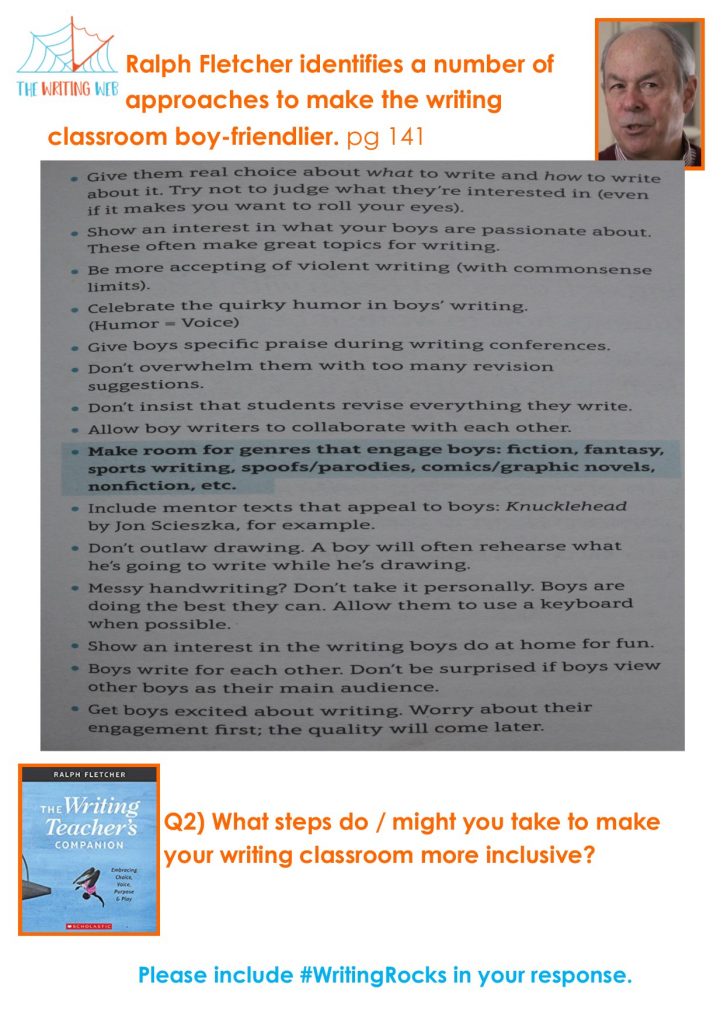
· As best we can, make the writing workshops that our classrooms look like this …

· I just should say straight off that that page SINGS to me! Ralph Fletcher is a hero.
· I hear you! I’m also in awe of this chunk of day-to-day truth:
· ‘Boys are far more likely than girls to hear to the word inappropriate applied to their writing. As a result, boy writers will often feel that they have been shut down and censored. Who can blame them?’ pg 139
· Please don’t – that’s such a terrible thing to read isn’t it?!
· I know but on a more positive note, the lightbulb moment for me was ‘humour = voice’.
· This is certainly true of The Writing Web bloggers who write for pleasure; their individual senses of humour are revealed as their writing voices develop.
· Ralph Fletcher: I do think this is a crucial link.
· This is something I really want to look at this year. I have been spending the summer looking at my own writing habits and how I can use this to make my classroom more inclusive. Everyone has different needs and habits
· For example, I need background noise to write. Could I create a playlist that children could listen to quietly with headphones while they write to keep them focussed?
· I also love background music but some children hate it. Never lyrics for writing though – teacher writer insight? In class, I ask the children and usually YouTube Disney Classical music, there are a few long albums’ worth (always forwarding when it gets to ‘Let it Go’).
· But you said background ‘noise’ not specifically and @jonnywalker_edu prefers a noisy café. For others it’s definitely silence. The option of headphones sounds like the way forward.
· We are in a lucky position where we have one to one iPads so the children have their own head phones which is fab. I find they always quite like the Gladiator soundtrack, the sound track is instrumental and lovely.
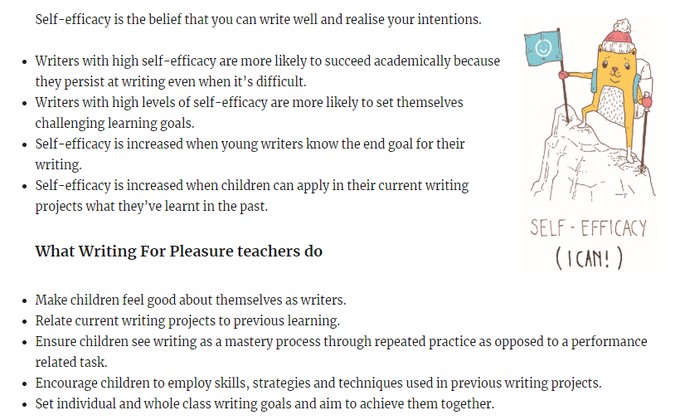
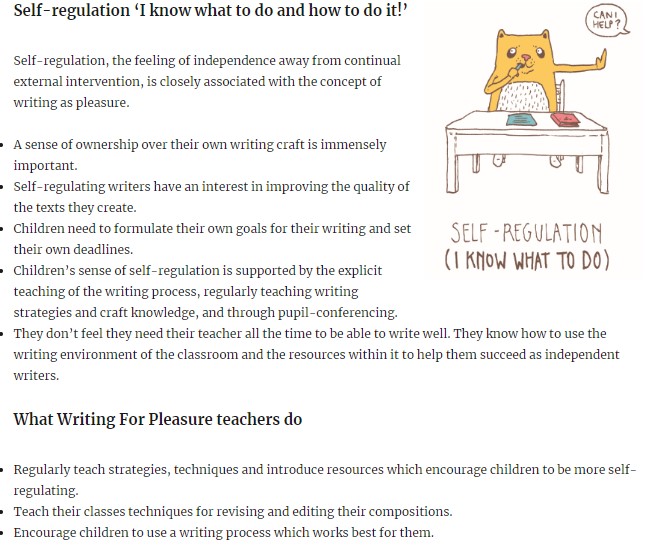
· This was principle of effective practice most expertly realised by @lit4pleasure’s writing for pleasure research.
· Reading, Sharing & Talking About Writing:
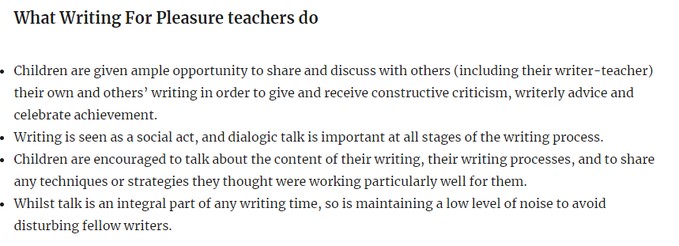
· These are just some of things we saw writing for pleasure teachers doing during our research.
· Setting Writing Goals:
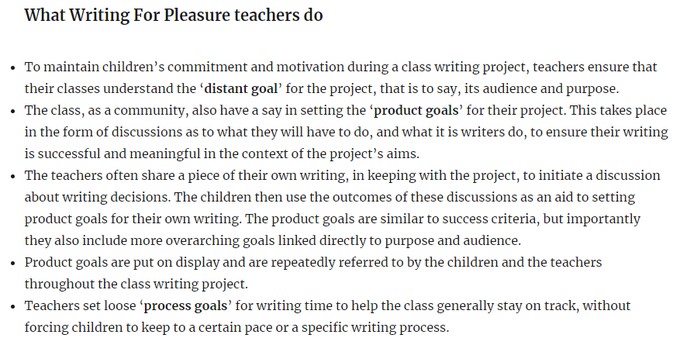
· This is what has been missing for me. Product goals are very much at the centre of all my planning next year.
· I supported my class in asking their peers for feedback on their writing. The outcomes were good. They would come to the front and ask the class what they thought about something in the writing: “Have I made this sound spooky?” They would then have the choice of who to ask for feedback. I would sit and listen but not be ‘the sage on stage’. Publicly, the children saw that they mattered in the development of each other’s writing.
· Only started doing it after I started joining in with the chats. And so, I’ve got a whole year of this ahead now!
· I think it’s really important to consider the audience, purpose and effect. Encourage children to think about who they are writing for, why they are writing and what do they want the reader to feel or think when they read their writing.
- This Isis Lecture from Philip Pullman is certainly worth a read. It came out just as I started teaching and has been my guiding light in ethos for all this time.
- So much to absorb in that. Brilliant. Tragic that so little has changed in the ensuing 16 years.
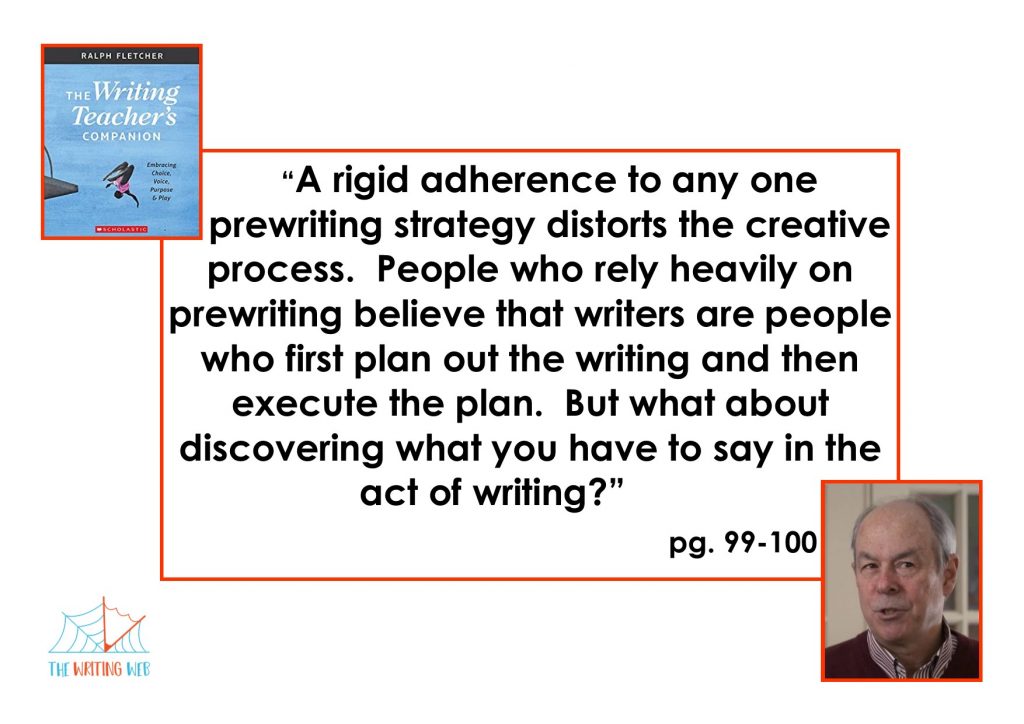
- I agree. We will often plan, as I want them to consider the arc of a story etc before writing, but with little ones after the plan they often feel like they’ve written the thing. That can suck the interest out for them. If it is something they have been really immersed in, or they can often produce something wonderful straight off. This applies to poetry, in particular, and when what they are writing about is their choice. However, to encourage description and detail and teach specific aspects, plans can be very important.
- I think it’s more about exposure and discussion so that the children are brimming with ideas and desperate to write. That’s when the writing flows.
- I feel like Winston Churchill sums it up pretty well: ‘Plans are of little importance, but planning is essential’.
- That’s also how I feel about lesson planning! It’s more organic that written prompts.
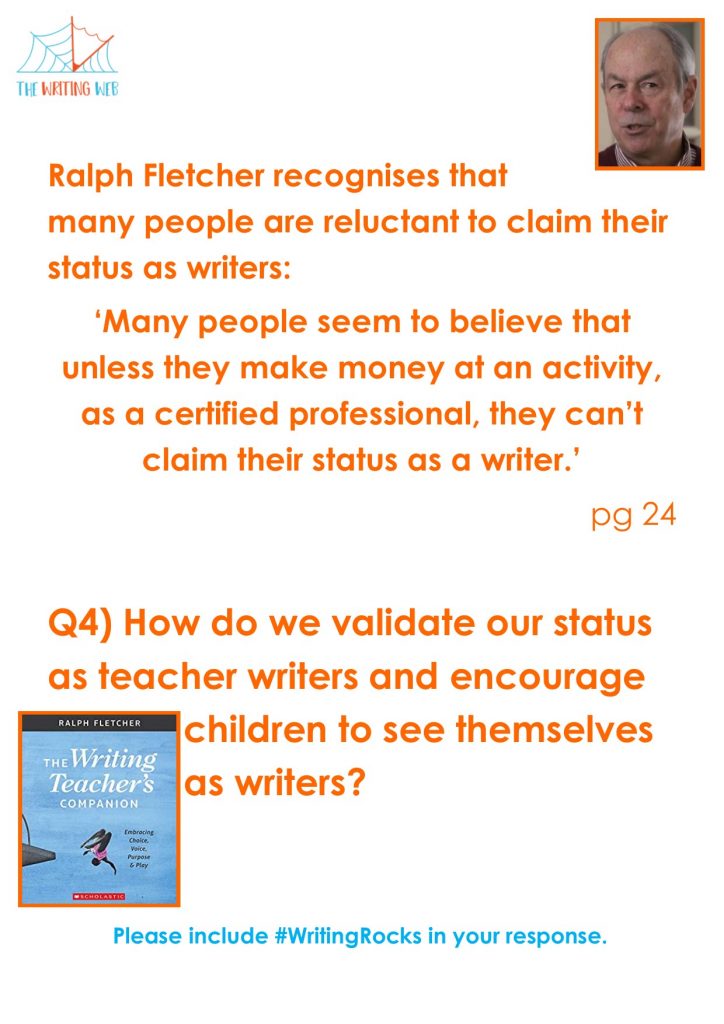
- I am a professional teacher of writing, among other things, and as such it is vital to claim this status for a number of reasons.
- Alienation from our product, which is our pedagogy, is partly responsible, in my view, for the teacher recruitment and retention crisis.
- I claim my pedagogy as an intrinsic part of my being without which I could not be. Therefore, I take pleasure in my work because my labour has a value that is not divorced from me. By extension, the same culture is evident in my classroom.
- The dichotomy of producer versus consumer which we find in education is writ large in every classroom. I say, ‘I am a producer of writing, I am a producer of my own pedagogy and I am a teacher who wants children to be producers too!’
- I share my own writing journey with them. Talk about my ideas and ask their opinions. Model writing frequently and hold creative writing drop ins for children who want to write their own stories and want to share them and get feedback
- We must try and meet each other soon please. It sounds like you’re doing very interesting work!
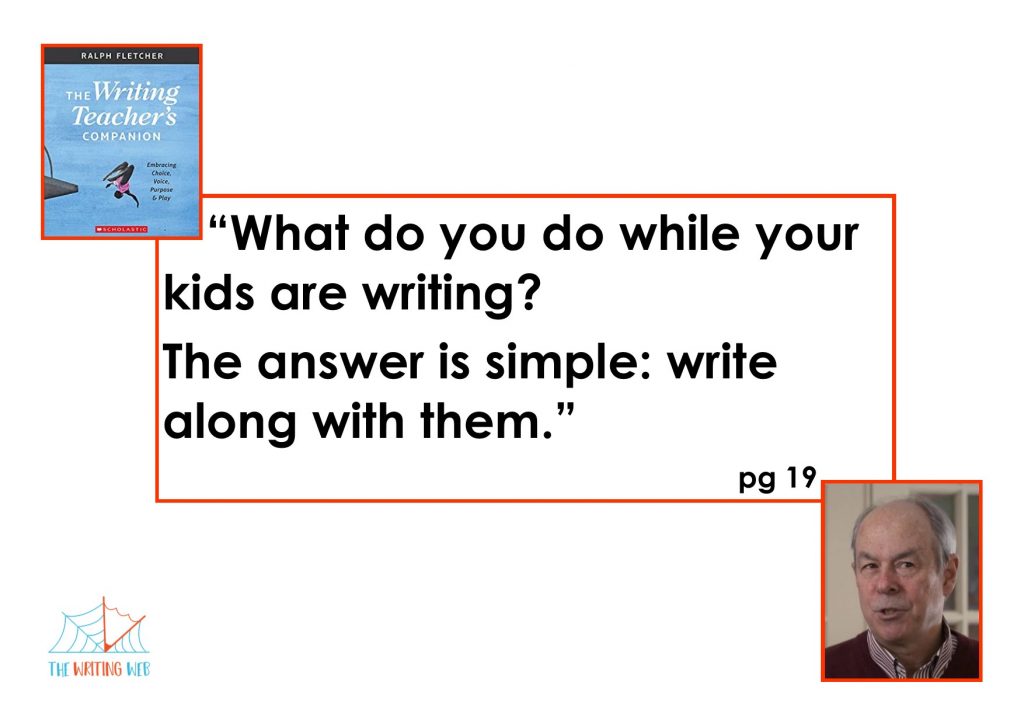
- My classes have often said how much they like that I do the work alongside them (and not just in writing). I do it for two reasons: I enjoy it and the children appreciate seeing me do what they’re doing. We’re in it together and joy in work is life-long-lasting.
- I like this idea. Are all of your children able to work independently while you write?
- Yes, though some tasks need less guidance. It’s also not for the whole session obviously! I’ve just started doing this in writing and can see the benefits.
- Thanks. Might try and do this a bit more
- Would like to hear how it goes. I have a more detailed game plan for this in the new year so will let you know how it goes.
- The notion of having ‘skin in the game’ chimes most with my experience.
- Ralph Fletcher: ‘You earn the right to ask, “What kind of environment do we need so we can all do our best writing?”‘
- I like the use of “we” in Fletcher’s statement. Subtle things like this are the most important, not faked grand gestures.
- I’ve developed writing along with the children over the past few years – specifically narrating editing as I go: “Oh, actually, what was that great phrase we found?” *look at word wall* “I wonder if I should paragraph here? How would my reader feel?” etc It’s been very effective.
- Best thing I did all year (and it was so teaching-changing!) was have a pupil conference where I was the pupil and the pupil commented and asked me about my work. It was tremendous…boy, did I learn a lot about writing and teaching and VALIDATING pupil writers!
- Such an interesting way of empowering children. I’m sure the discussions were hugely illuminating, Ben.
- I was really quite overwhelmed at the feedback! One of those teacher times you don’t forget.
- I’m sure! Just wondering if you’ve ever produced magazines or newspapers in school so that they can also develop editorial technique?
- One of the best things I’ve done is start a school magazine! Blogged about it here.
- And – HOORAY! @SadiePhillips won the @EgmontUK Reading for Pleasure award for it this year!
- Sharing my own writing for the children to enjoy. My English Working Wall has copies of magazine articles I have written and copies of our Class Write stories from past units for them to read.
- I try to lead by example as a writer teacher, taking every opportunity to make the tools and strategies I genuinely employ explicit. I look for examples of these in their behaviours, including praising children who take part in rap battles, those who carry notebooks out onto the playground and those who ask questions.
Our next #WritingRocks chat will be at 8pm [GMT] on Wednesday 18th September when we’ll be drawing together our thoughts on how the insights from Michael Rosen’s ‘Did I Hear You Write?’ (1989) might inform our classroom practice.
In the run up to the next chat, we’ll be posting questions on Twitter and would love you get involved.