BIG thanks for your contributions: @lit4pleasure @one_to_read @BeckyMarie80 @TobiasHayden @sam_creighton @kashleyenglish @gurevitchesque @BillyBeanWrites @SadiePhillips @Marcelavb3v @Miff__@lovelymissf @MrsSmanwar @mr_o_connor
AND @DouglasKKaufman for writing this month’s questions and stimulating the debate!
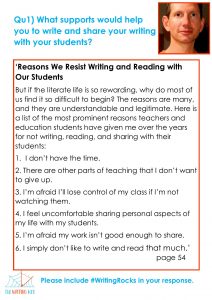
- I think role models in the form of other colleagues who have already adopted this practice would be a significant factor. If we expect children to learn to love writing and reading by creating the conditions in our classroom cultures through modelling a literate life, then surely schools should be places where teachers are inspired in the same way.
- Did you know that the @writingproject in America offers accreditation for teachers who work at becoming writer-teachers. Is this something we need in the UK? @NWPUK
- Here’s an easy answer: yes.
- It’s something I’m trying to do more, sit & write with them, inspired after being on the @OtherWiseEdu poetry retreat. My previous reticence came from fearing I wasn’t ‘helping’ them enough unless I was hovering over them. But they need the space to write freely before feedback.
- In terms of helping me do it more, it’s definitely about making the time to sit and write, both in and out of school and prioritising it. The power of seeing your teacher as a writer is undeniably powerful, as my school has found with the influence of reading-teachers
- Agreed! And when we cite teacher writing as a component of the formal curriculum, showing its connection to other components, it often gains more respectability with administrators.
- This is a beautiful thing @jonnywalker_edu @jocastro_coach
- We must never forget what Vygotsky taught us all on our teacher training! Children learn by observing the habits of their writer-teachers.
- If I was observed in my home writing environment at my desk kids might learn to become prolific nose pickers!
- This is so true. The reciprocal benefits of the approach are powerful; I learn so much from writing amongst the children.
- I’ve been reflecting on some of these experiences with @jr_library (currently online) Creative Writing Club. https://thewritingweb.org/the-a-z-of-pants/…
- I’ve tried this before a few times and at the start the children couldn’t cope working independently and write for a sustained period without asking questions. They also used it as an opportunity to not be as focused. After a few sessions I felt it motivated them more to write.
- I appreciate your problem. I’d ask: what am I asking them to do? Is it something worth writing about? Is it something they have something to say about? Write for 5-10 mins yourself and if anyone comes for help say “I’m writing.”
- I appreciate your problem. I’d ask: what am I asking them to do? Is it something worth writing about? Is it something they have something to say about? Write for 5-10 mins yourself and if anyone comes for help say “I’m writing.”
- This models what writers do brilliantly! They pick up the habit of getting down to writing AND learn to confer with one another if they want immediate help.
- And stops this idea of the teacher being the “sage on the stage” or all-seeing guru. The truth is…we ain’t! The true teacher is the community of writers.
- This is so true you know. Power in numbers. 30+ genuine writers is better than one trying to fake it till they make it.
- Plus some kids do it better than the teacher #justsaying #shockhorror
- Thanks Ben. Yes we have tried a few approaches and we started off for 5-10 mins and then we extended it to 15-20 where appropriate and it worked well. It took a while to create the correct climate. I want to build on it next year to look at how we can develop it further
- Good! Great stuff. I think 10 mins max would be what i would do in my writing and then I go round the children to ask them how it’s going. Then I listen and learn!!
- I usually found myself going 5-10 minutes, though I never had a rule. I remember one day where I wrote the whole class, then shared at the end, because everyone else was writing so diligently and didn’t seem to need my help.
- That’s wonderful. A real sense of ownership and confidence with the group!
- It sounds bad, but I think lots of teachers would be worried that they were seen to be not using their time effectively by other/senior staff. So, I guess, reassurance ‘from on high’ that this is seen as good/best practice
- And yet they would be praised for reading children’s books…but not for writing in lesson to truly model the writer’s life. Hmm…many need to rethink their ingrained opinions don’t they?!!!
- It’s about changing perspectives and challenging how and why schools do things the way they do. If we start to think about writing in the same way we think about reading, it all starts to ‘click’
- I think lots of teachers fear losing control of the class while writing in the classroom. Ensure that children know what is expected from them. Give children agency and allow/ teach them self-regulation. So teachers are able to write alongside children.
- I think this would give children and teachers more confidence.
- A 1000 times yes! You’re so right. Unfortunately, teachers too often have to enact teaching practices which create a culture of learnt helplessness in their writing classroom which then stops them from being able to write with their pupils.
- Yes! Teaching children over time how to work independently is essential to success but is sometimes neglected in our enthusiasm to get writing with them. We can do both at the same time.
- In a women’s centre & a community centre I taught in, discussions on children’s books came up, I mentioned I had books from America like Politically correct children’s bedtime stories & diverse kids’ books, students showed a lot of interest so I took them in, there was huge interest from the students who borrowed my kids’ books to read to their kids & grand-kids so I bought them one or two for their community centre library. It helps finding common ground & if that meets community need all the better.
- I was inspired by one of my professors at university with regard to this. She talked to us about writing freely for and with children and removing barriers and restrictions of a dictated form or structure. Perhaps open up writing possibilities with a shared idea?
- This is a beautiful thing – and I think you’re right – but how do we get this message out?
- I think that we sometimes assume that using a specific structure for writing can be less daunting than ‘free’ writing. It’s about finding ways to be fallible as a writer. It’s about being vulnerable in our compositional process. Not an easy shift to make.
- I always share this piece with trainee teachers on our writing hub days at the start of the year – ‘writing is messy’ by the great David Almond https://davidalmond.com/on-writing/
- I think many teachers resist as they fear the writing process themselves, and are daunted by the prospect.
- So many teachers said this when I conducted my research, but it became clear that their students were the perfect audience with whom to be vulnerable. They were so enthusiastic about seeing their teacher’s writing. Teacher and students learned together by exploring together.
- Children are the kindest people to share a writing community with. They just champion your writing efforts. They want your writing to do well & always on the money with their advice. They are so happy to see you join them. Brings a tear to my eye – I miss having a class
- We’ve been writing poetry around Shaun Tan’s The Arrival and earlier this week they all anonymously swapped poems and were discussing and writing comments on them. It was so buzzy and they were so supportive of each other (but still giving constructive critique). It was lush.
- I have to say I do try and share writing quite often, they often need me to share to encourage them to share. They don’t necessarily draw from what I do more ante prompted to share.
- It’s fascinating to see how our writing teaches them both particular skills and the habits of writers, including how to share.
- Using the space on #WritersByNight to publish my writing regularly without fear of it being ripped apart is helping me get over my fears around publishing. Especially as I can keep popping back to edit my ‘finished’ piece!
- https://thewritingweb.org/writersbynight/ #WritingRocks
- What a great idea this is!
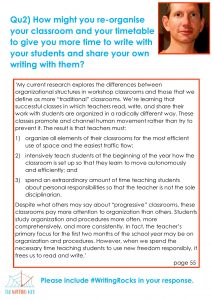
- There are so many things to consider but chiefly it comes down to a highly organised environment, which is conducive to peer-to-peer support. Routines and expectations must be set out explicitly so that the teacher can find the time and space to write alongside the pupils.
- As far as the timetable goes, following the mini-lesson, writing time (both class and personal projects) and sharing time format works beautifully to ensure there is a big chunk of writing happening every day. Even when doing genre study or a dabbling/planning session, both children and teachers can find time to write regularly. This reassuring consistency helps young writers to take control of their own writing process.
- https://writing4pleasure.com/reassuring-consistency/
- I think it’s about setting out how things will work early on and developing independence. I teach Y6 but have always thought that, if there was a whole school approach, you wouldn’t need to spend time doing this at the start of the year.
- A 1000 times yes! Sorry for a cheeky plug but this is why Phil and I spent so much time setting up our ‘Welcome Projects’ at the beginning of the year across the year group. We wrote about our experience in our book, Real World Writers.
- Yes Sadie!
- Children do not experience this approach consistently over the course of a Key Stage, so its powerful benefits don’t sing out from the data. A Yr5 class I taught years ago were split in Yr6, in English the three teachers could tell which children came from Blue 5.
- I did research in the great Nancie Atwell’s school. Because every teacher was on board with writing, the time needed at the beginning of the year to develop independence was drastically reduced. The children knew what to do from the year before.
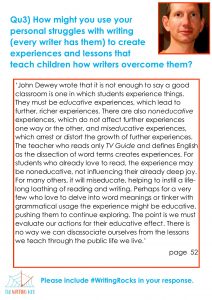
- My goodness: how to start?! I have these ideas that burn when I think of them, really urging me to write; then I have so much trouble expressing them and pinning them down correctly. It’s a real struggle and one I share with the children.
- I feel this pain
- Sometimes I wake up in the night with a hint of an idea that if I don’t scribble it down it disappears or floats away, only thing is it’s hard to articulate exactly what the idea is sometimes. I don’t know if that makes sense. It’s a whisper.
- I just can’t express myself.
- Something really powerful is to help learners think about different planning tools that they can use to organise their ideas and how different tools can be layered in, together. Perhaps starting with a mind map and then moving to a flow chart.
- I can’t begin to describe how many writing-in-progresses I have.
- I struggle to think of ideas without being inspired by something, which is why I always spend time on idea generation too. I think just talking openly about challenges and making kids realise it’s ok to make mistakes helps. I’m not amazing at spelling and I’m honest about it. If I’m in the flow of writing / modelling and I’m not sure how to spell a word, I’ll tell them and say “I’m not sure if that’s right but I’m just going to circle it and look it up later as I’m kind of in the flow and don’t want to forget my idea/sentence” – show them your strategies!
- I also share my notebook and let them see how messy it is!
- I had a brilliant performing arts teacher who had students work with Granada TV, one of them became a film maker with British film board & American films, the teacher never made us study ‘the classics’ but gave us access to modern, progressive, liberating & often local playwrights which was empowering, inspiring and made students feel part of an effective writing community – was at school in Hull so often saw John Godber’s plays & talks. So easy for students to be part of a writing community that way.
- As a group we learn from each other’s strengths – when writing action for example I might say I’m struggling with … can anyone help and children offer support and ideas? This then created a climate where the children felt confident to do this too. We also use visual stimuli.
- I think one of the most challenging areas is helping writers to see editing and revision as an ongoing process. This is often seen as something that happens ‘at the end’ of writing which can be less effective. Modelling how this works as a continual process.
- Part of the problem is we teach (and have been taught) that revision is about “fixing mistakes” when it’s actually about experimenting and exploring multiple options. Revision is the FUN part because that is where we play!
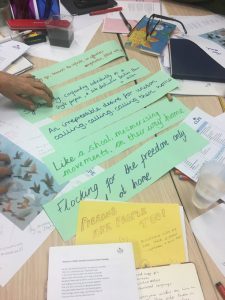
- Sometimes physically moving lines or words can help emphasise this ‘playing around with words’ idea of revising. Trying things out collaboratively early on to encourage discussion is fab too. Eg below of collab poem and deciding where to place the lines / how to tweak.
- And a few others
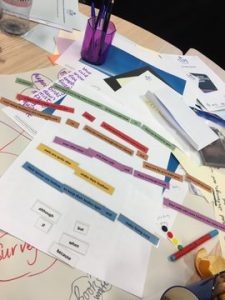
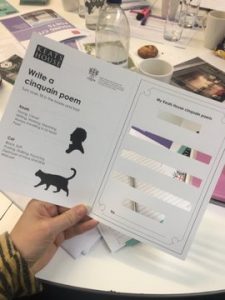
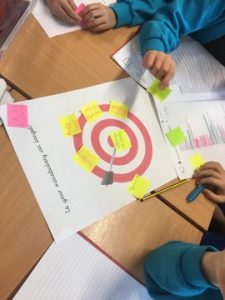
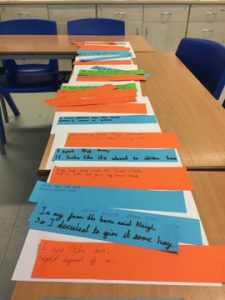
- So true. It can be ongoing, but how many children know that they can approach their drafts in a number of ways depending on which process they prefer at any given time? This example of practice may shed some further light.
- Yes! Thank you for sharing this.
- Kelly if you can find an opportunity to visit this guy teach writing do it! My goodness!
- Cheers Ross!
- It is important to develop trust in the classroom, which allows teacher-pupils an open dialogue, so when you ask children or other adults in the classroom for their opinion, they offer their real reflection on your piece of writing, they are not only trying to please you.
- I ‘think out loud’ a lot. Verbalising choices, decisions, revisions, ideas etc. so they understand the how/why. I also have a story I wrote when I was in Y6, which I photocopy each year and ask them to read, revise, give feedback on, then reveal the author of the piece at the end!
- That’s a great idea! Not sure I ever finished a story in Y6 though!
- I think just doing a bit of thinking aloud helps. Just by saying ‘Hmm, how should I start? I could…’ can get children over an initial hurdle.
- Modelling thinking is so powerful. Showing it’s okay to try out ideas & change your mind & delete & redo bits. I always talk about how I spend ages writing & re-writing beginnings particularly & will often find myself deleting the initial idea that got me started.
- Yes, sometimes it’s just getting started that’s the hardest thing; just putting pen to paper.
- I vote that we change the word ‘revision’ to ‘experimenting’ in the writing process – how powerful would that be?
- Bang on! I think Ross and Phil recommend, to the children, leaving a blank right-hand page in their writing books to be used as a ‘trying things out page’. It’s always there throughout the composition to do as you say: experiment!
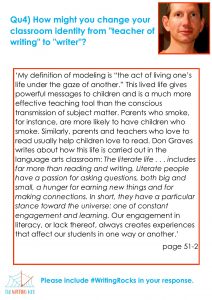
- We often see teachers/parents reading but seeing adult role models write is far less common… writing WITH the children is so powerful & all teachers should do it more. I also started writing myself: started with blogging but now poetry, journaling, narratives. Now drawing too.
- I’m also getting into etymology and origins of words, which I find fascinating.
- I love this! Language and history.
- My dad taught Maths and a musician too, in one 6th form he’d set the class to work and with their permission & knowledge that they could approach him any time, he’d sit in corner quietly playing his guitar. I was at the school next door, students would come up to me raving about it, apparently it was the most popular Maths class as the music helped the students learn. Don’t know if that’s because music is mathematical or soothing or both but interdisciplinary or links between disciplines.
- 100% this, being an authentic role model is so important in inspiring attitudes and behaviours
- I absolutely love the final six or seven lines of the quote. Literacy as curiosity! #mindsetshift!
- I think sharing with the children your own authentic and purposeful projects, whatever they are. I remember sending an example of classroom practice I had written back-and-forth to each other several times over the course of a week. It had scribbles, notes, questions etc. I used it in a mini-lesson to explain the act of revision and how talking about your writing with someone can support this process. The children were very interested to see it when it ended up published here.
- Sharing your authentic writing, you share your life as a writer!
- I carry my writing journals around a lot. When an idea strikes, in the middle of science, use it to make a quick note. I noticed my identity as a writer was increasing when end-of-year gift from children included nice writing pens and writing journals!
- Yes! And this is truly authentic. Many of the professional authors I know will not leave the house without their writer’s notebook in hand, ready to collect bits and pieces of experienced life.
- Love this idea of a writing journal. Do kids ever get to glimpse inside or does it remain private and mysterious?
- I share mine all the time. My students love to see its messiness–it’s role as a repository of “potential writing.” It helps them see how little, documented observations can lead to substantive pieces.
- I definitely show them and show them the drawings and scribbles in it. As well as getting ideas on the fly, it’s useful to share ideas on the fly too “I wrote about that the other day! Where was it…” – cue flicking through… it happens
- It sounds like a really valuable resource.
- I have purchased writing books and I am going to join the writing community on a Sunday – I have told my bubble and they are excited for me because they know that I enjoy writing. I want to make more opportunities to write for pleasure and I will discuss this with my children. Next year I would like to develop this and have a writing for pleasure workshop and I would also like to explore working with parents on this. I want to share my ideas with the children so they see me as a writer and not just as a teacher who teaches writing.
- Has anyone said this already? Teachers (me included) may resist writing alongside the class because it feels a bit showy offy. It may not feel (or look like) like you are serving the children. You have to absolutely know why you are doing it.
- This is interesting. I have worried about this before – that perhaps it serves me more than them. There is so much value in writing alongside the children, and I’m in no danger of overdoing it yet, but it is an interesting exercise to think, where the limit would be?
- I think the essential point is that you are writing *alongside the children*. This way, you’re not serving yourself but are acting as a fellow member of the writing community. You are seeking advice, giving advice and writing yourself too. You are serving the community.
- It shifts the entire way you operate as a teacher (You are a writer-teacher.) & everything becomes more meaningful, because everyone has skin in the game. The children respect this, including when you share insights & genuinely seek their advice when you’re struggling.
- Share your writing journal.
- When your children publish something, include your piece, too.
- Write stories with the children as characters (they love this and will write their own versions).
- Nice idea about using them as characters. It’s funny, whenever a I’ve had contact with authors/writers, some children always ask them “can you write about us!?” It always strikes me as odd, cos they authors don’t know them, but obviously something they like!
- I was jealous of a boy called Mark who came into school with a couple of those books where you could ‘put’ yourself and your friends into a pre-written story & they’d send you a copy. I remember the stories were awful but Mark Was In Them! This was in the 1980s.
Have your notebook and pen at the ready for next month’s chat, where we’ll be putting the literate life into practice! See you there at 8pm on Wednesday 5th August 2020.